JAKARTA, Agung Intiland News — Global economic pressures that increase throughout May 2026 are starting to affect the Indonesian financial market. The weakening of the rupiah exchange rate, the increase in the benchmark interest rate, and increasing geopolitical uncertainty have made investors begin to shift their focus to real assets that are considered more defensive, including Indonesian industrial estates and logistics warehouses.
In the midst of market volatility, Indonesia's industrial property sector is still considered to have resilience because it is directly supported by national manufacturing, distribution, and logistics activities.
Rupiah Touches Record Low
In the past week, the rupiah exchange rate has experienced significant pressure and had touched a new low against the United States dollar.
The condition is triggered by:
Rising global geopolitical tensions
Foreign capital outflows
Market concerns about regional economic stability
The latest report states that the rupiah has weakened by around 6% throughout 2026 and was in the range of Rp17,700 per US dollar.
Bank Indonesia Raises BI Rate to 5.25%
In response to market turmoil, Bank Indonesia on May 20, 2026 decided to raise the BI Rate by 50 basis points to 5.25%.
This policy is carried out to:
Maintaining the stability of the Rupiah
controlling inflation
Strengthening National Economic Resilience
Bank Indonesia called the move part of a stabilization strategy amid the impact of the war in the Middle East and increasing global uncertainty.
Investors Are Starting to Look for "Defensive" Assets
In volatile market conditions, investors are starting to be more cautious of high-risk instruments and switching to real needs-based assets.
One of the sectors that is considered to be stable is:
Industrial Estate
Industrial Lots
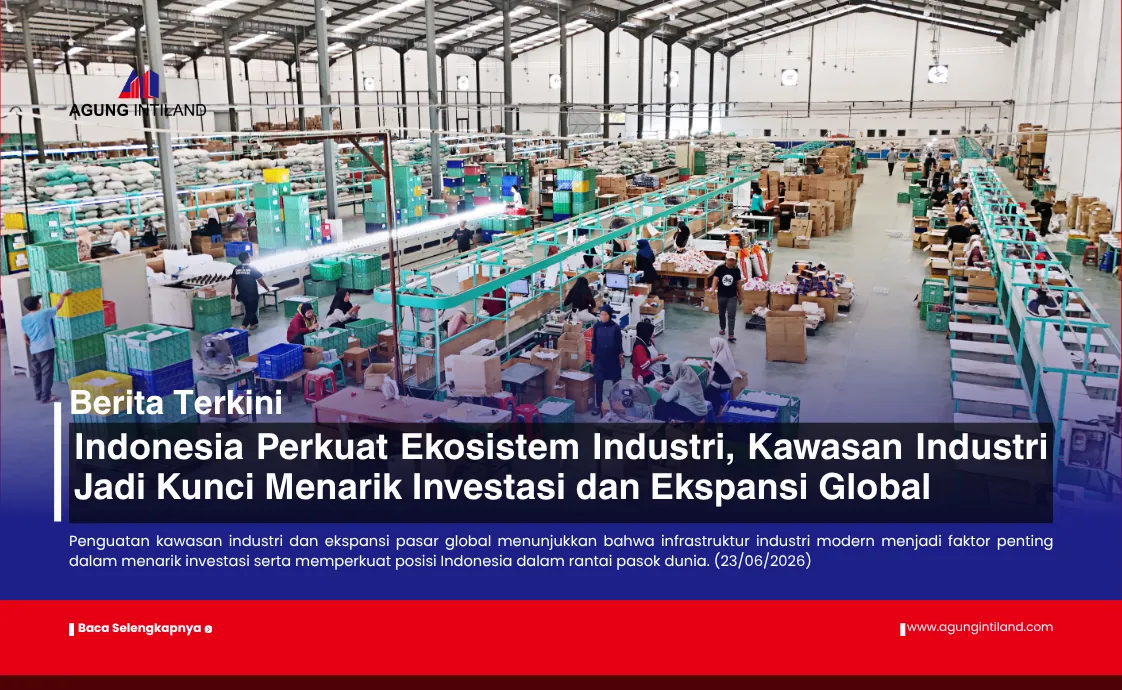
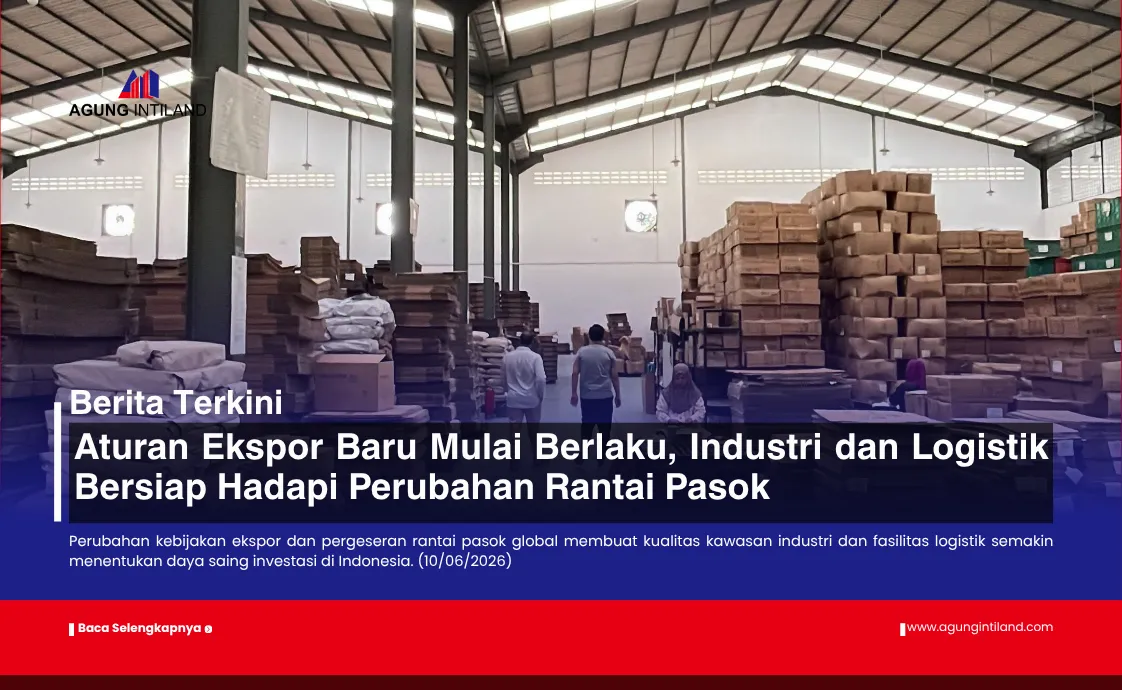
Modern Indonesian Warehouse
Logistics Distribution Center
Industrial assets are considered more resilient because they are still needed by the following sectors:
Manufacturing
Logistics
FMCG
E-commerce
Even though the global economy is slowing down.
National Industrial Activities Are Still Expansive
In the midst of economic pressure, Indonesia's manufacturing sector is still showing growth.
The latest data shows that Indonesia's manufacturing PMI in the first quarter of 2026 was at the level of 52.03, which means it is still in the expansion phase.
In addition, the realization of national investment in the first quarter of 2026 was also recorded at around IDR 498.79 trillion, growing by more than 7% on an annual basis.
This shows that industrial investors still see Indonesia as a strategic market for the long term.
West Jakarta Industrial Estate Still Targeted
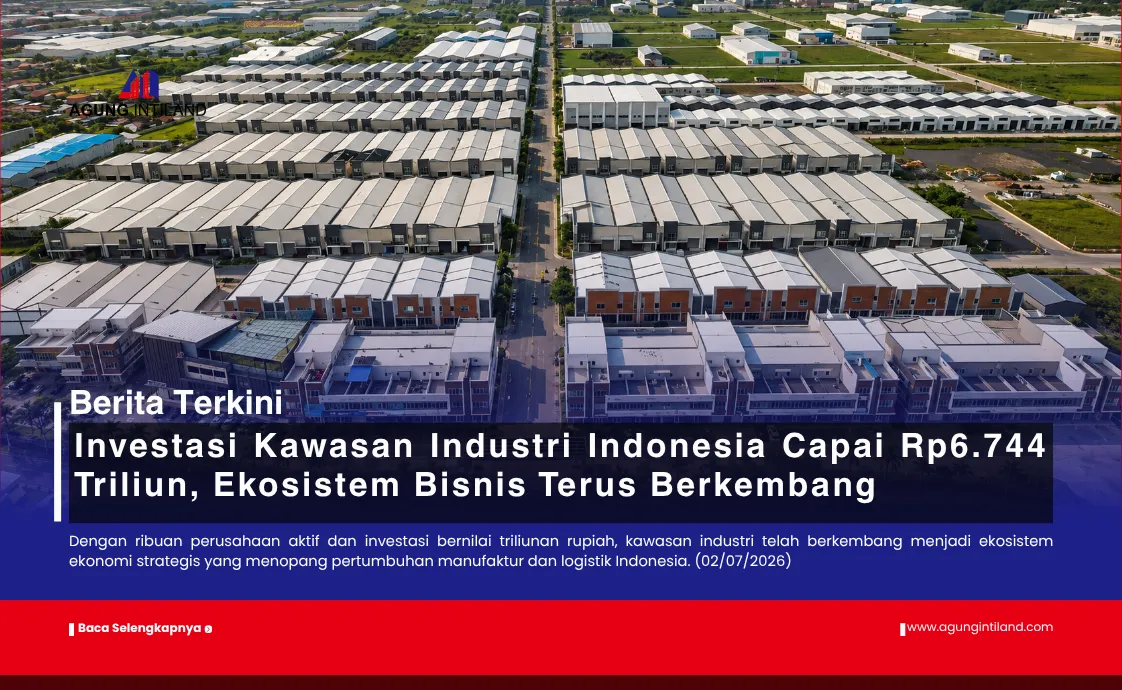
The western region of Jakarta, especially the Tangerang industrial area, remains one of the areas most in demand by investors and industrial tenants.
Some of the main factors:
Direct access to the main toll road
Near the consumption center of Jabodetabek
connectivity to Soekarno-Hatta International Airport
mature logistics infrastructure
This condition makes industrial estates in the region considered more prepared to face economic pressure than areas that do not have a strong logistics ecosystem.
ROI Analysis: Why Industrial Properties Are Still Attractive
In the midst of economic uncertainty, investors are now focusing more on assets that have:
Potential Cash Flow Stable
Real market demand
High occupancy rate
Potential for long-term value increases
Industrial property is considered to meet these characteristics because it is directly supported by productive economic activities.
Strategic industrial estates with high occupancy rates also have the opportunity to maintain better asset value than other property sectors that are highly dependent on public consumption.
Laksana Business Park Perspective
Laksana Business Park management sees that the current economic conditions actually make investors more selective in choosing assets.
"In stressful market conditions, investors tend to look for assets that are actually used by real business activities. Industrial estates and warehouses are still one of the relatively stable sectors because logistics and distribution needs are still running," said the management representative.
According to him, industrial estates with strategic locations and mature infrastructure will still have strong attractiveness amid changes in economic conditions. (JP)
Outlook Semester II 2026
Entering the second half of 2026, the market is expected to still face global pressures, especially from:
International Geopolitics
Exchange rate volatility
Global Interest Rate Movements
However, the sector:
Logistics
Manufacturing
Warehousing
Industrial Estate
is projected to remain one of the main pillars of national economic activity.
Investors are expected to increasingly focus on industrial assets that:
Operational Readiness
Have a strategic location
able to generate stable income in the long term