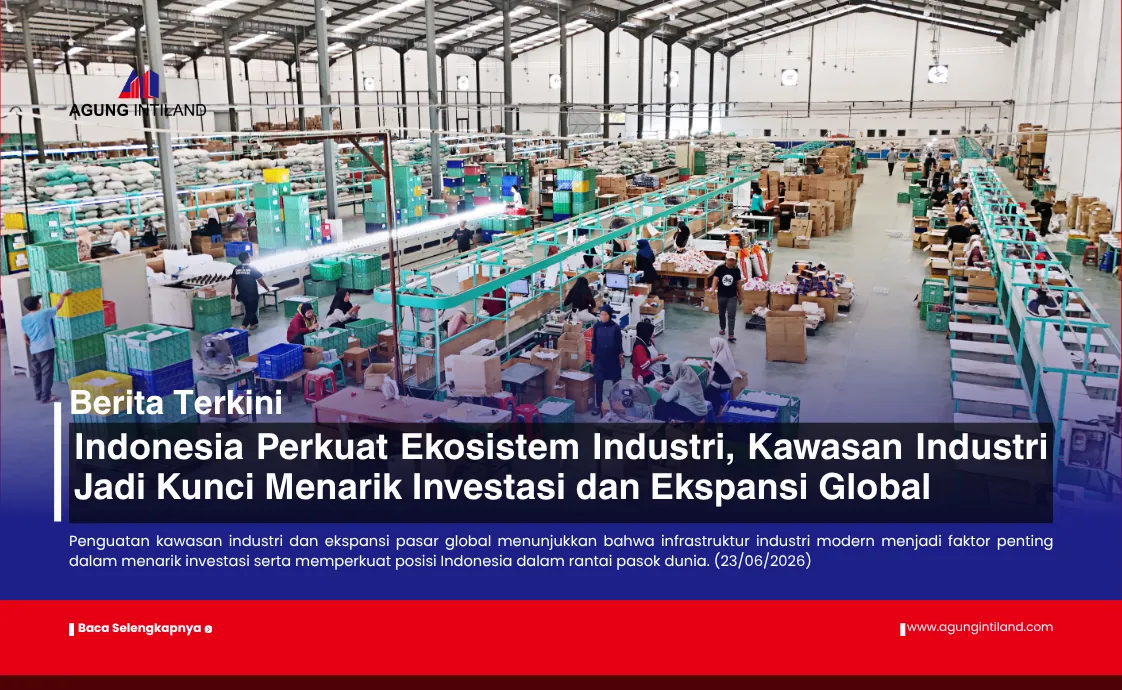
JAKARTA, Agung Intiland News — Indonesia's industrial estates continue to show their role as one of the main drivers of national economic growth. Not only is it the center of manufacturing activities, but industrial estates are now developing into a business ecosystem that connects production, logistics, distribution, and long-term investment.
The Ministry of Industry noted that industrial estates in Indonesia have absorbed around 2.35 million workers, an increase of around 15 percent compared to 2024, with a total investment realization of IDR 6,744.58 trillion. This growth shows that industrial estates are still one of the strategic sectors in strengthening the foundation of the national industry.
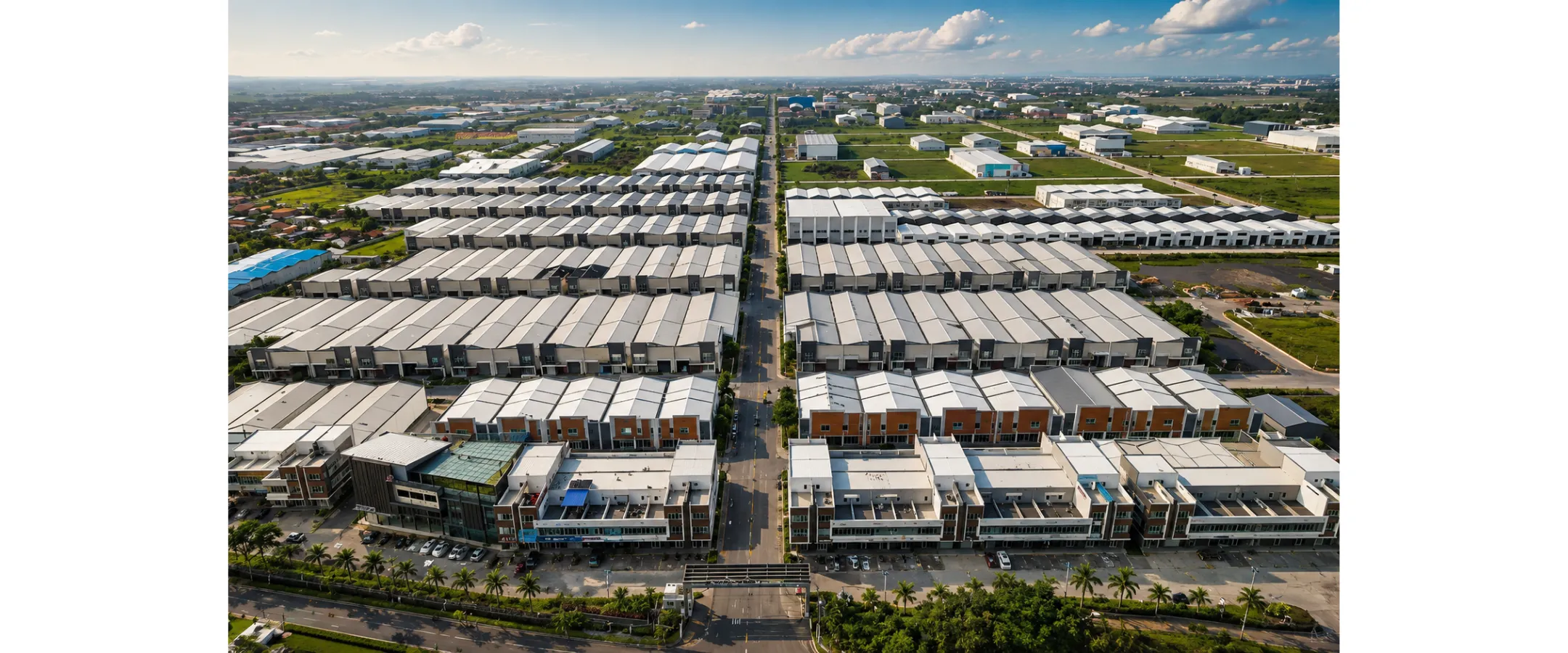
Until 2026, Indonesia has 179 industrial estates with a total area of more than 101 thousand hectares. The area has become the place where around 11,970 companies or active tenants from various industrial sectors operate, ranging from manufacturing, logistics, to other supporting industries.
The large number of tenants shows that industrial estates not only function as business land providers, but have developed into centers of economic activity that create new supply chains and strengthen the relationship between upstream and downstream industries.
This development also encourages changes in investor needs. Currently, the company not only considers land prices, but also looks at the readiness of the region to support operational activities, such as transportation access, availability of utilities, logistics facilities, and ease of business development.
Although the development of industrial estates continues to expand to various regions of Indonesia, industrial estates on the island of Java, especially the Greater Jakarta and Tangerang corridors, still have high attractiveness because they are supported by mature infrastructure, proximity to consumption centers, and connectivity to national distribution lines.
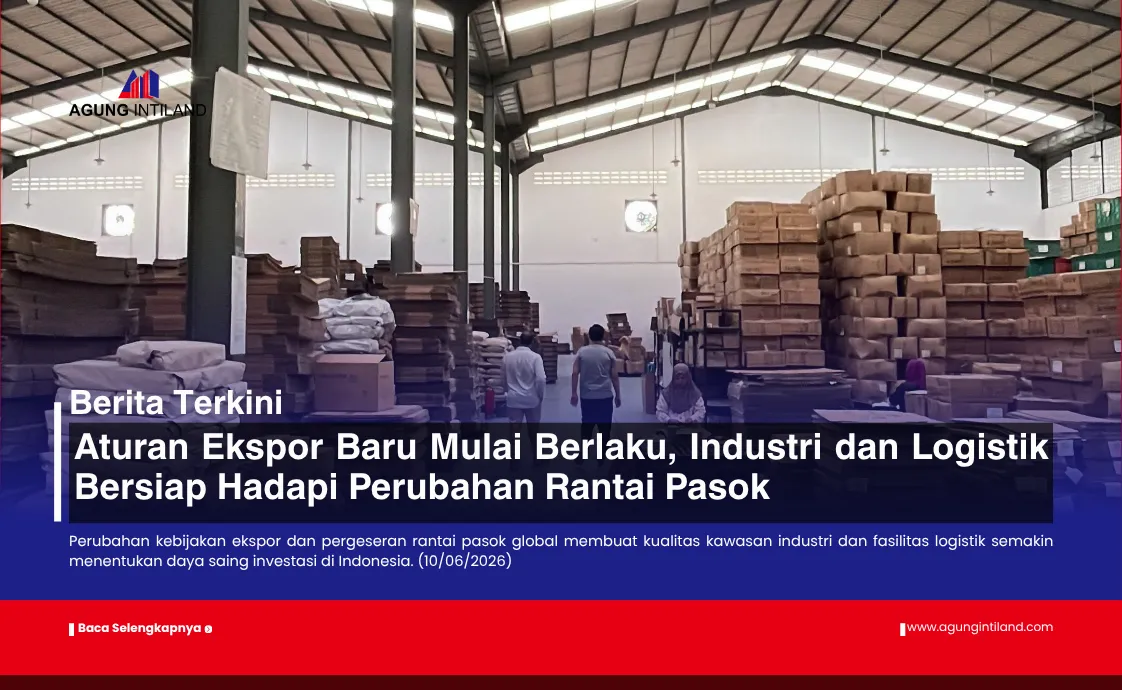
The growth in the number of companies in industrial estates also has an impact on the increasing need for supporting facilities, including modern warehouses, flexible business spaces, and distribution centers. For business actors, the existence of facilities that support supply chain efficiency is an important factor in maintaining business competitiveness.
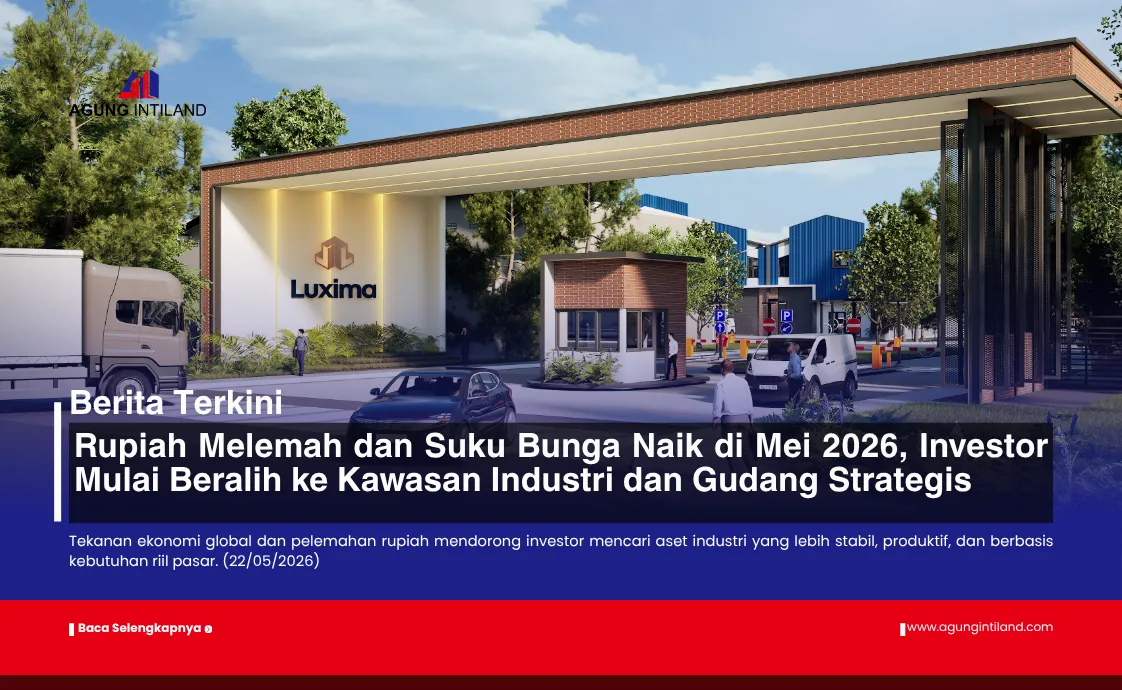
The management of Laksana Business Park sees that the current national industrial development shows a change in the pattern of investor needs. Companies are no longer just looking for business locations, but also looking for areas that are able to provide added value through infrastructure, accessibility, and a business environment that supports long-term growth.
"Investors are increasingly paying attention to the readiness of the region as a whole. Factors such as connectivity, utilities, and the region's ability to support business operations are important considerations before making an investment," said the management representative.
With increasing investment, the number of tenants, and the need for modern industrial facilities, industrial estates are expected to remain one of the strategic sectors in Indonesia's economic growth. Regions that are able to present an integrated business ecosystem will have a greater opportunity to attract investors and support the development of national industries. (JP)