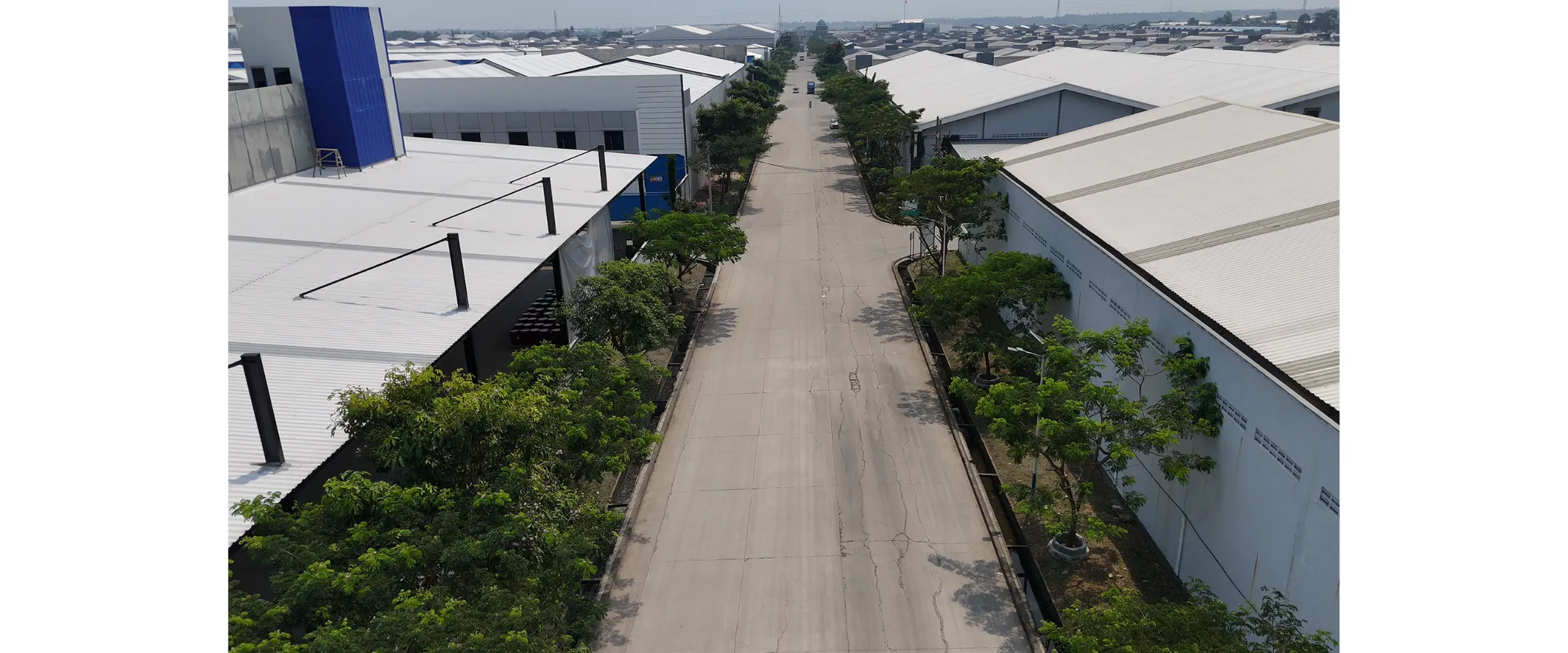
The industrial warehouse market in Indonesia is entering a new phase in 2026. The surge in demand that has occurred in recent years is now starting to put pressure on space availability, especially in strategic areas.
The latest data from Colliers International shows that the occupancy rate of modern warehouses in the Jabodetabek region has reached 95%, indicating a tightening and competitive market.
This condition is a strong signal that industrial warehouses are no longer just support facilities but have evolved into strategic assets in the business ecosystem.
Occupancy rates above 90% are generally categorized as markets with limited supply.
With a figure reaching ±95%:
Warehouse unit availability becomes more limited
Tenant decision-making time accelerates
Competition among companies intensifies
In such conditions, companies that delay decision-making are at risk of losing the best locations.
The surge in warehouse demand is not without reason. Several key sectors are driving it:
1️. E-commerce and Regional Distribution
The growth of e-commerce drives the need for warehouses as distribution centers and fulfillment hubs.
2️. 3PL Logistics
Third-party logistics (3PL) companies continue to expand their distribution networks to meet client needs.
3️. Global Manufacturing Relocation
The China+1 strategy makes Indonesia a destination for factory relocation, thereby increasing the need for:
Raw material warehouses
Distribution warehouses
Logistics facilities
According to market analysis by JLL, the logistics and manufacturing sectors remain major contributors to industrial space demand in Indonesia.
Amid limited supply, not all locations have the same attractiveness.
The western corridor like Tangerang is one of the most sought-after areas because of:
Direct access to major toll networks
Proximity to Soekarno-Hatta Airport
Connection to Tanjung Priok Port
Close to the largest market in Indonesia (Jabodetabek)
This combination makes the area ideal for both production and distribution activities.
With limited land and increasing demand, investors and tenants are becoming more selective.
The focus is no longer just on price but also on:
Area infrastructure
Logistics access
Utility stability
Operational security
Integrated industrial areas are the top choice as they can comprehensively address these needs.
The current market conditions bring several important implications:
1. Time Becomes a Critical Factor
Decisions need to be made faster before units run out.
2. Strategic Location Value Increases
Warehouses in premium locations tend to have higher value appreciation potential.
3. Shift to Long-Term Planning
Companies are starting to think about needs 3–5 years ahead, not just current needs.
In an increasingly competitive market, industrial areas with infrastructure readiness, optimal logistics access, and integrated planning are in a more advantageous position to attract demand.
An approach to area development oriented towards operational efficiency and sustainability is a crucial factor in meeting the needs of modern tenants amidst the 2026 demand surge.
With an occupancy rate exceeding 95%, the Indonesian industrial warehouse market shows that demand has surpassed the normal phase.
For business players and investors, this condition presents a crucial momentum to secure strategic locations before availability becomes even more limited.
In an increasingly competitive market, speed and accuracy in decision-making will be the key determinants of success. (JP)
FAQ
Why are industrial warehouses nearly full in 2026?
Due to increased demand from e-commerce, logistics, and global manufacturing relocation.
What is the current warehouse occupancy rate in Indonesia?
In the Jabodetabek area, the occupancy rate reaches around 95% in 2026.
Are there still available warehouses?
There are, but they are becoming more limited, especially in strategic locations.
Where are the most sought-after warehouse locations?
The western corridor of Jabodetabek like North Tangerang is one of the most sought-after locations.