Date: February 10, 2026
Website: Agung Intiland
JAKARTA, Agung Intiland News - In the process of business expansion, the decision to rent or buy an industrial warehouse is not just about price and building size. Many new companies realize the risks after operations begin, ranging from logistical access constraints to legal issues.
This article discusses crucial aspects that must be checked before making a decision, to ensure that warehouse investment truly supports long-term business efficiency and growth.
1. Legal Status & Permits
Legal status is the primary foundation in industrial property.
Things to ensure:
Land certificate (clear HGB / HPL)
Land use accordance with spatial planning
Building construction permit & operational permit
A warehouse with proper legality will:
Facilitate the expansion process
Reduce legal risks in the future
Be easier to transfer or resell
2. Location & Logistics Access
Location determines operational cost efficiency.
Consider:
Direct access to main roads or toll roads
Distance to ports, airports, or distribution centers
Traffic conditions for heavy vehicles
Warehouses located in areas with planned logistics access generally have a competitive advantage, especially for logistics, FMCG, and manufacturing businesses.
3. Building Technical Specifications
Not all warehouses are suitable for all types of businesses.
Check the following specifications:
Building height (clear height)
Floor load capacity
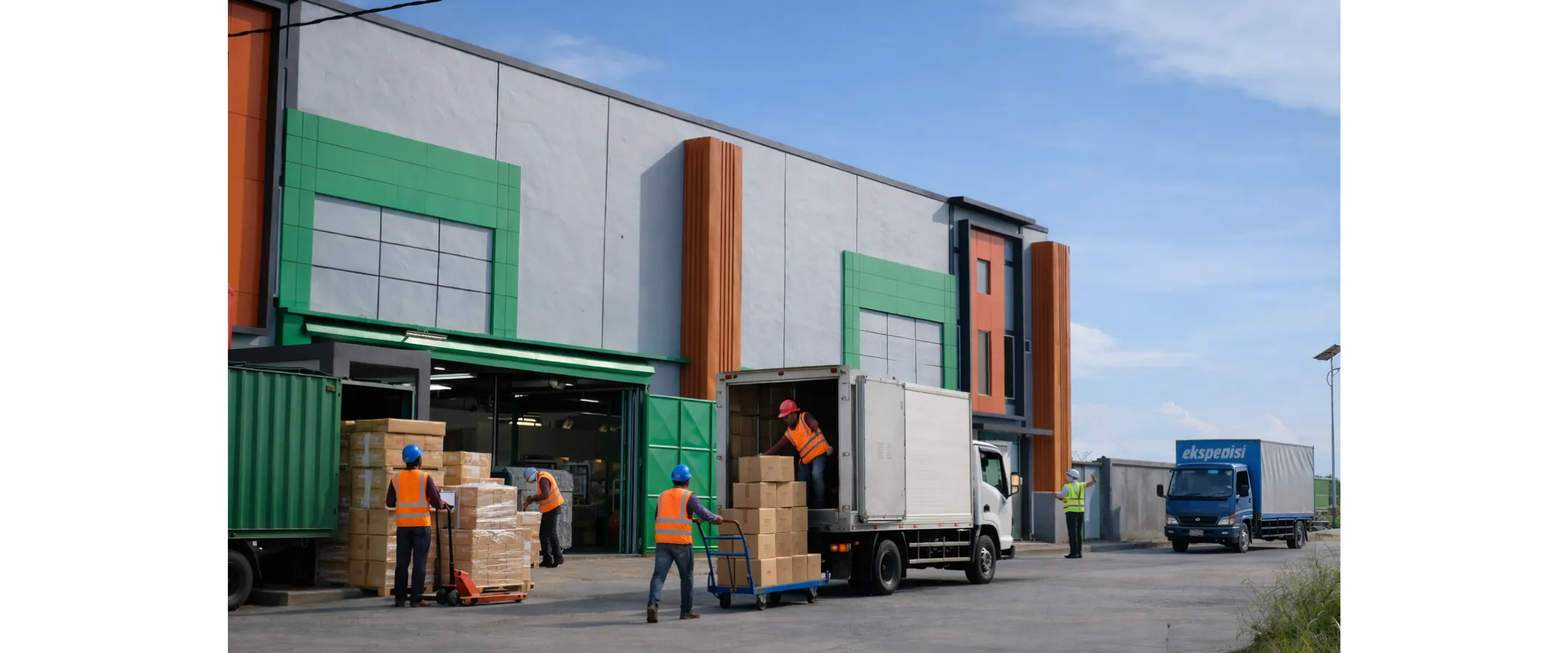
Width of loading & unloading areas
Availability of dock levelers or ramps
The right specifications will enhance:
Operational security
Loading and unloading efficiency
Long-term usage flexibility
4. Supporting Area Infrastructure
Warehouses do not stand alone—they depend on their surrounding environment.
Key factors:
Drainage system & flood control
Area security
Availability of electricity & water
Internal area traffic management
Professionally managed industrial areas usually provide operational convenience while maintaining property value.
5. Ownership Scheme & Flexibility
Renting or buying has different implications.
Considerations:
Duration of warehouse use
Business expansion plans
Flexibility for building function changes
This approach helps companies choose the option most aligned with their business strategy.
Corporate Perspective
Based on industrial area management experience, choosing the right warehouse not only impacts daily operations but also the sustainability of asset value. Area planning, infrastructure, and environmental management are important factors that often only show their benefits in the long run.
In the practice of industrial area management, selecting the right warehouse has proven to have a significant impact on business operational efficiency and sustainability. The combination of location, building specifications, and area management complement each other.
Conclusion
Choosing an industrial warehouse is a strategic decision, not administrative. By considering legality, location, specifications, and area management, companies can minimize risks while maximizing investment value.
A mature approach from the beginning will help the warehouse function optimally as part of a sustainable business ecosystem. (JP)
Disclaimer
This article is part of Agung Intiland's corporate communication and is prepared for the purpose of information and public education related to the development of industrial area ecosystem.