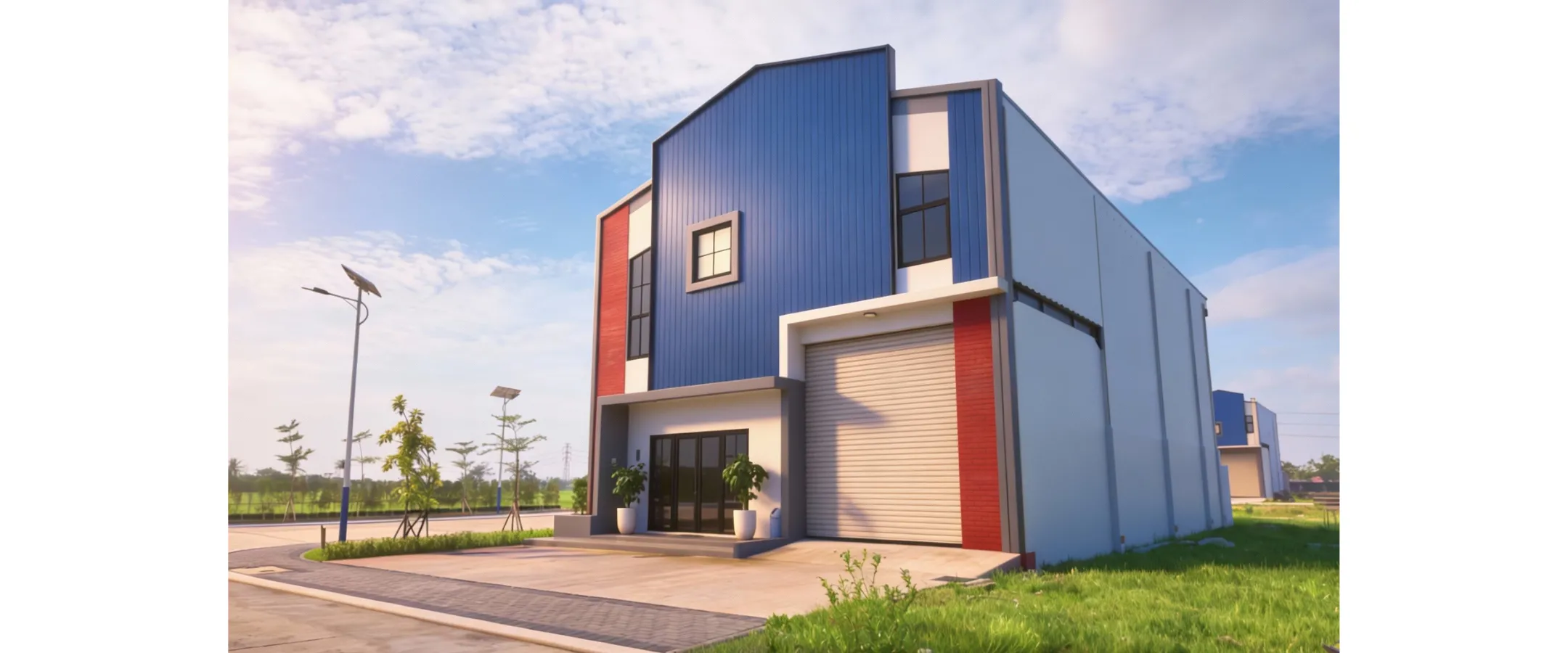
Introduction: Warehouse Standards Have Drastically Changed
Changes in distribution patterns, e-commerce growth, and global manufacturing relocations have led to continuous evolution of industrial warehouse standards.
Previously, warehouses only served as storage spaces, but now these facilities have become crucial parts of modern supply chain systems.
Companies no longer seek warehouses "just because," but warehouses that can:
Enhance operational efficiency
Accelerate distribution
Support business expansion
Maintain supply chain stability
Therefore, understanding modern industrial warehouse standards is a crucial step before making rental or investment decisions.
The building structure determines the capacity and efficiency of a warehouse.
Key specifications:
Clear height: ideally ≥ 9–12 meters
Column spacing: width for layout flexibility
Steel structure: durable & low maintenance
Warehouses with high clear height allow the use of vertical racking systems that increase storage capacity without the need for land expansion.
Floor Load Capacity
Floor load capacity determines a warehouse's ability to withstand the weight of goods and heavy equipment.
Common standards:
2–5 tons/m² for modern warehouses
Flat and pressure-resistant surface
This is crucial for forklift operations, heavy goods storage, and logistics movement efficiency.
Loading Docks & Logistics Access
Modern warehouses must have efficient loading systems.
Key features:
Parallel loading docks for trucks
Dock levelers
Spacious maneuvering area
Access for large vehicles (40 ft trailers)
Without these systems, the loading and unloading process will take longer and increase operational costs.
Security System and Area Management
Security is a mandatory standard, especially for high-value warehouses.
Key components:
24-hour CCTV surveillance
Access control
Area security systems
Adequate area lighting
In practice, warehouses located in integrated industrial areas usually have more stable security systems compared to standalone locations.
Utilities: Electricity, Water, and Drainage
Stable utilities ensure uninterrupted operations.
Minimum standards:
For certain industries (FMCG, cold storage), utilities are critical factors.
Location determines long-term efficiency.
Strategic location criteria:
Near main toll roads
Access to ports
Proximity to airports
Near consumer markets
In Indonesia, western corridors like Tangerang are chosen for their ability to connect production and distribution activities in one area.
Layout Flexibility and Expansion
Modern warehouses must adapt to business needs.
Considerations:
Flexible layout
Expansion area
Ease of modification
Growing companies need space that can scale with operational needs.
Environmental and Sustainability Standards (ESG)
Global trends are moving towards eco-friendly warehouses.
Examples of implementation:
Waste management
Energy efficiency
Natural ventilation systems
Multinational companies now consider these aspects when choosing warehouse locations.
Integrated Industrial Areas as a Benchmark
According to market analysis by JLL and Colliers International, global companies tend to choose integrated industrial areas.
Reasons include:
Ready-to-use infrastructure
Clear logistics access
Professional management
Operational stability
Areas designed with a long-term approach are usually better equipped to meet modern warehouse standards comprehensively.
Modern Industrial Warehouse Standard Checklist
Use this checklist before selecting:
Minimum clear height of 9 meters
Floor load according to requirements
Availability of loading dock
Access for large trucks
Complete security system
Stable utilities
Strategic location
Managed area
Conclusion: Modern Warehouses are a Competitive Advantage Modern industrial warehouse standards are not just technical specifications, but part of a business strategy.
The right warehouse can: - Reduce logistics costs - Increase operational efficiency - Support business expansion - Maintain supply chain stability In the context of global relocation and industrial growth in Indonesia, companies that choose warehouses with the right standards will have a significant competitive advantage. (JP)
FAQ
What are the standards for modern industrial warehouses?
The standards for modern industrial warehouses include technical specifications such as building height, floor load capacity, loading dock, and security systems.
What is the ideal height for an industrial warehouse?
Generally, a minimum of 9–12 meters to support storage efficiency.
Why is a loading dock important?
Because it speeds up the loading and unloading process and reduces logistics operational costs.
Does location affect warehouse performance?
Yes, location greatly affects distribution costs and operational efficiency.