Agung Intiland, October 2, 2026
Indonesian Manufacturing Enters Expansion Zone Again
Indonesia's manufacturing activity showed improvement in September 2026.
S&P Global noted that Indonesia's manufacturing Purchasing Managers' Index (PMI) rose from 49.8 in August to 52.4 in September. A reading above 50 indicates that manufacturing activity is in an expansion phase.
The gains were mainly driven by rising domestic demand and exports. New orders grew at the fastest pace since February, while export orders increased for the second month in a row.
For the industry, this change is not just about the PMI numbers. When orders increase, companies need to ensure that their production capacity is able to keep up with market needs.
Orders Increase, Pressure on Warehouses Increases
Increased production activity usually has consequences for the supply chain.
Raw materials need to be available in sufficient quantities. Finished products require storage space. Finished goods must then be sent to distributors and customers.
September PMI data showed the backlog of jobs increased at the strongest pace in five years, while finished goods inventories fell at the fastest pace since August 2020. This suggests manufacturing companies are using inventories to meet rising demand.
This situation shows that warehouses are not just storage space, but part of the company's ability to meet market demand.
As production increases, infrastructure becomes increasingly important
Companies that are ramping up production need more than just machinery and labor.
Warehouse capacity, loading and unloading areas, vehicle access, utilities, security, and connectivity are all part of operations.
Therefore, companies that are experiencing growth need to ensure that their operational locations are able to keep up with the increase in activities.
Having enough space today doesn't necessarily mean having enough capacity for the next few years.
Industrial Estates Become Part of the Operational Chain
This is where industrial estates have a role.
An integrally managed area can provide an environment that supports production, warehousing, distribution, and other business activities.
For companies, the consideration is not only the area of land or buildings, but also how the location can help maintain smooth operations.
This is even more relevant as manufacturing activities begin to increase and companies need to respond to demand more quickly.
Industrial Investment Still Moving
The manufacturing development took place amid growing national investment.
BKPM noted that Indonesia's investment realization in the first semester of 2026 reached IDR 1,010.6 trillion, an increase of 7.2% compared to the same period the previous year. The transportation, warehousing and telecommunications sectors as well as housing, industrial estates and offices are included in the group of sectors with large investment realization.
In the same period, downstream investment reached Rp300.1 trillion, or 29.7% of total national investment.
This means that the development of industrial capacity is taking place at the same time as the need for supporting facilities increases.
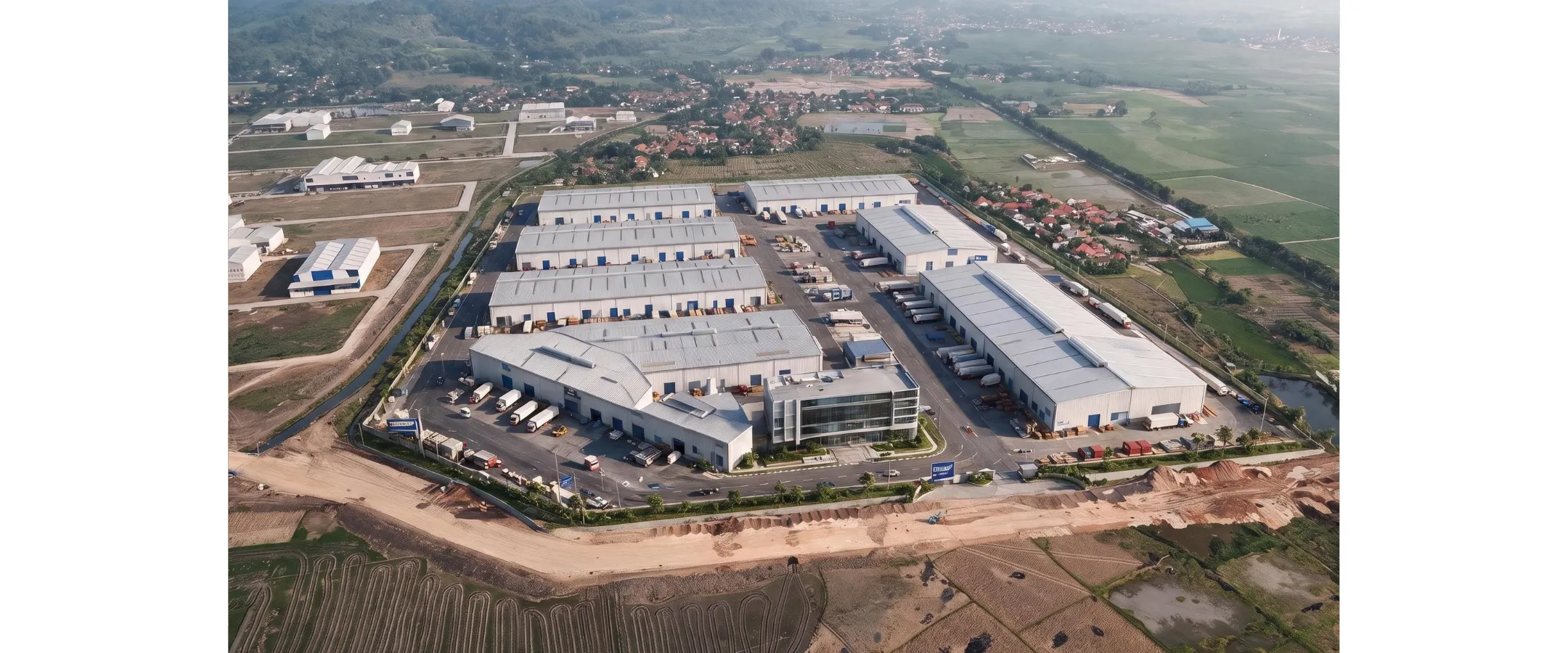
Laksana Business Park Supports Industrial and Warehousing Activities
Laksana Business Park was developed as an industrial and warehousing area in Tangerang and already has an Industrial Estate Business License (IUKI).
This area is about 20 minutes from Soekarno-Hatta Airport, with travel times that can vary depending on traffic conditions.
For companies that need space for industrial and warehousing activities, connectivity aspects and operational environment are one of the considerations in determining the location.
Laksana Business Park also presents Luxima, a 4-in-1 property concept that combines warehouses, offices, residences, and business areas in one building.
It's Not Just About Increasing Production
The recovery of manufacturing activity provides one important lesson.
When demand increases, companies not only need to increase production. They also have to make sure the entire operational chain is able to keep up.
Starting from raw materials, storage, production, to distribution.
Therefore, warehouse readiness and operational locations are part of the company's strategy to respond to growth.
Conclusion
Indonesia's increase in the manufacturing PMI to 52.4 in September 2026 indicates that manufacturing activity is back in the expansion zone. At the same time, increasing new orders and a backlog of jobs indicate that there is pressure on production capacity and inventory.
For the company, this condition makes the need for production facilities, warehouses, and industrial estates even more relevant to be taken into account in the expansion strategy.
When demand starts to grow, companies need not only greater production capacity, but also operational space that can keep up. (JP)
FAQ
What is Indonesia's manufacturing PMI in September 2026?
PMI Indonesia's manufacturing was recorded at 52.4 in September 2026, up from 49.8 in August.
What does PMI above 50 mean?
PMI figures in The top 50 indicates manufacturing activity is in an expansion phase.
Why is the increase in production related to the need for warehouses?
Production growth can increase the need for storage of raw materials and finished products as well as distribution activities.
What is the realization of Indonesia's investment in the first semester of 2026?
BKPM recorded investment realization of IDR 1,010.6 trillion, growing 7.2% on an annual basis.
Does Laksana Business Park have IUKI?
Yes. Laksana Business Park already has an Industrial Estate Business License (IUKI).
Reference Source