Introduction: Global Shift Not a Temporary Trend
The global geopolitical dynamics in the last five years have reshaped the world's manufacturing map. The US-China trade tensions, post-pandemic supply chain disruptions, and geopolitical conflicts in various regions have prompted multinational companies to adopt production diversification strategies.
This phenomenon is known as the China+1 Strategy.
For Indonesia, this situation is not just a global issue but a concrete opportunity in the context of factory relocation to Indonesia, which is beginning to be evident in investment data and industrial sector growth.
1️. Indonesian Manufacturing Investment Data: Trends in the Last 3-5 Years
According to the Investment Coordinating Board (BKPM) report (public summary), the manufacturing sector consistently remains the largest contributor to national investment realization.
Some key indicators:
The manufacturing sector contributes around 30%+ of the total national investment realization in recent years.
The growth of investment in the manufacturing industry is in the range of double-digit annually in the post-pandemic recovery period.
The industrial areas in Java absorb the largest portion of manufacturing investment realization.
In industrial market reports by JLL and Colliers International, the demand for industrial land in the western Java corridor shows an increasing trend, especially from sectors such as:
Electronics
Automotive & components
FMCG
Logistics & e-commerce
2️. China+1 and Production Relocation Projections
The China+1 strategy encourages global companies to:
Expand production facilities in alternative countries
Reduce tariff risks and trade barriers
Bring production facilities closer to consumer markets
Southeast Asia is a major recipient region of this relocation, along with India.
Indonesia has quantitative advantages:
Population of ±270 million people (large domestic market)
Largest GDP in Southeast Asia
Economic growth stability around 5% per year in recent years
For manufacturing investors, these figures create two advantages at once: production market and consumer market in one location.
3️. Direct Impact on the Industrial Property Sector
Factory relocation not only means building production facilities but also:
Raw material warehouses
Distribution centers
Regional logistics facilities
Cold storage
Supporting industrial services
In several market reports, the absorption of industrial land in West Java and Banten is at a significant level compared to other regions. Generally, the projection of industrial property sector growth in Indonesia is expected to remain on a moderate to positive expansion path until 2026, assuming:
Relatively maintained geopolitical stability
Continued downstream policies
Ongoing infrastructure development
4️. West Java Corridor: Highest Demand Concentration
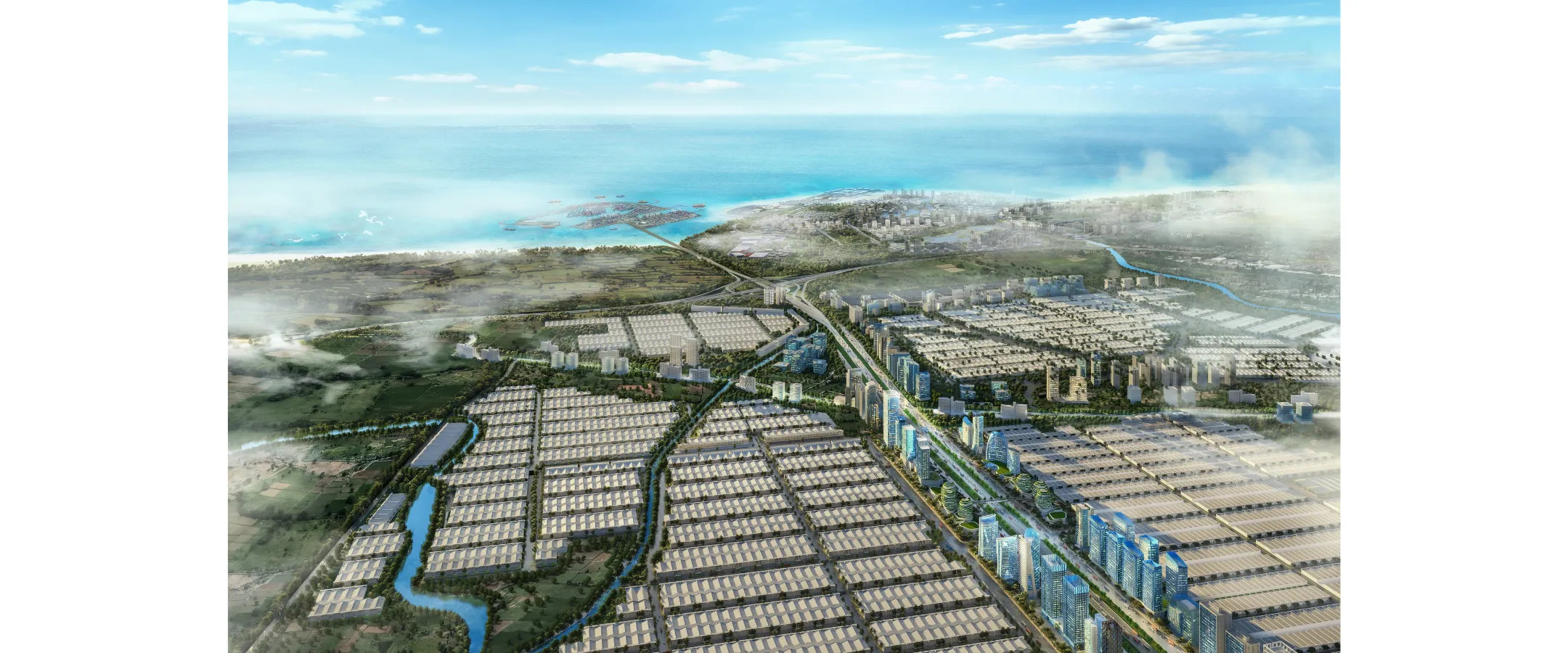
The Tangerang region and its surroundings are in a strategic industrial corridor that:
Connected to major toll networks
Has access to Tanjung Priok Port
Close to International Airport
Located in a mature manufacturing ecosystem
For major investors, the most considered factors are not just land prices but:
Logistics access certainty
Area infrastructure
Area management
Availability of utilities
Security and operational sustainability
Areas with integrated planning tend to be more prepared to absorb medium to large-scale relocations compared to unmanaged lands.
5. 2026 Growth Estimation: Moderate Scenario
Considering:
Global relocation trends
Manufacturing investment growth
Increased demand for modern warehouses
Expansion of 3PL logistics sector
The estimation of industrial space demand growth in Indonesia is potentially in the range of high single-digit to low double-digit positive annual growth, depending on the sector.
The segments predicted to be most resilient are:
Export-oriented manufacturing
Logistics and distribution centers
Supporting industries for downstream processes
6️. Risks and Determining Factors
Global investors still consider:
Regulatory stability
Labor costs
Energy availability
Port efficiency
Regional competition with Vietnam and Thailand also plays a crucial role in relocation decisions.
Therefore, the quality of industrial area management becomes a differentiating variable in attracting long-term investments.
Conclusion: Unmissable Momentum
Factory relocation to Indonesia is no longer speculation but part of the ongoing global supply chain restructuring.
Manufacturing investment data, stable economic growth, and Indonesia's strategic position in Southeast Asia strengthen the attractiveness of the national industrial sector. (JP)