Date: January 29, 2026
Website: Agung Intiland
JAKARTA, Agung Intiland News - The need for warehouse and logistics facilities in Java Island continues to show growth trends in line with the increasing activities of e-commerce, manufacturing, and national distribution. For investors and business players, purchasing warehouses in industrial areas is now seen not only as an operational decision, but also as a long-term strategic step in maintaining efficiency, business sustainability, and asset value.
However, choosing the right warehouse requires careful planning, understanding of regulations, and analysis of the area's potential. Here is a step-by-step guide that can be a reference before making a purchase decision.
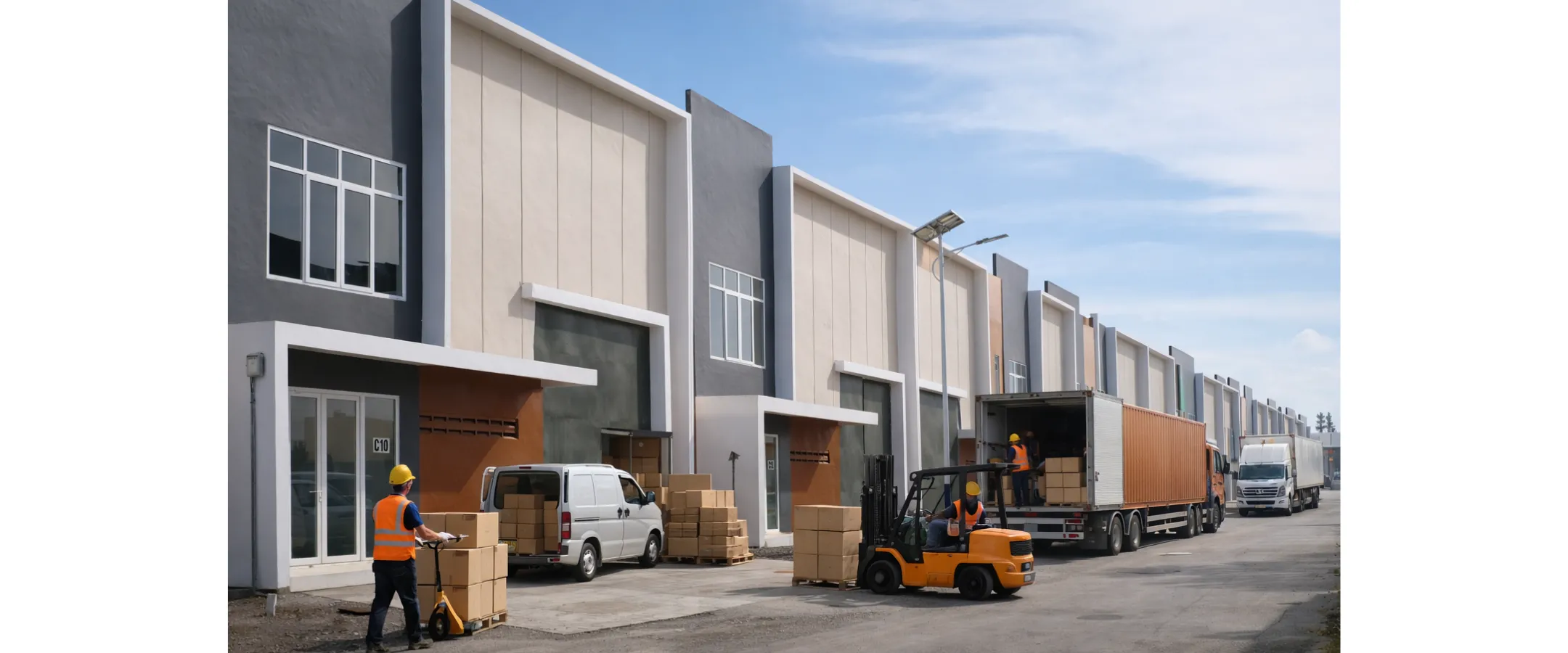
The first step is to map out the main functions of the warehouse, whether for raw material storage, distribution center, or regional logistics hub. Factors such as building area, ceiling height, floor capacity, number of loading docks, and the need for parking and maneuvering areas for large vehicles need to be adjusted to the type of goods and operational volume.
Additionally, consider business expansion plans in the next five to ten years to ensure that the purchased warehouse remains relevant to the company's growth.
Location is a determining factor for logistics efficiency. Warehouses located in industrial areas with direct access to toll roads, ports, airports, and main distribution routes will provide a competitive advantage in terms of travel time and distribution costs.
Industrial corridors in West Java, Banten, and East Java are currently the main focus for investors due to national infrastructure development and economic zone growth.
Ensure that all legal aspects comply with applicable regulations, from land certificates, building permits, to industrial zoning compliance. Clarity in legal documents will minimize risks in the future, especially for national or multinational companies that prioritize long-term investment certainty.
The quality of warehouse buildings greatly affects operational smoothness. Some technical aspects to consider include: - Building structure and floor capacity to withstand heavy loads and high rack usage - Drainage system and flood protection - Availability of electricity, water, and telecommunication networks - Area security system, including surveillance, lighting, and access control
Thorough evaluation will help ensure that the warehouse can be optimally used in the long run.
In addition to the purchase price, consider all additional costs that may arise, such as taxes, area management fees, building maintenance, insurance, and potential renovations or interior adjustments.
This approach helps investors and business players get a comprehensive overview of investment efficiency and asset return projections.
Warehouses in developing industrial areas generally have the potential for asset value appreciation. Consider regional development plans, government infrastructure projects, and industrial sector growth around the location as indicators of long-term prospects.
Areas with careful planning and professional management tend to be more stable in terms of property value.
Involving industrial property consultants, notaries, and legal teams will help ensure that the entire process, from negotiation to transaction, runs safely, transparently, and in accordance with legal provisions.
The management of Laksana Business Park, an industrial area developed by Agung Intiland, believes that the trend of warehouse purchases in 2026 will increasingly focus on the need for areas that not only provide ready-to-use buildings but also integrated area management systems.
According to management, legal certainty, well-maintained internal infrastructure, efficient logistics access, and post-sales service support are the main factors considered by investors and business players in making long-term decisions. This approach is considered capable of creating a sustainable business ecosystem while maintaining the value of industrial property assets amidst the dynamics of national logistics and manufacturing sector growth.
Buying a warehouse is not just about choosing a building, but about building operational foundations and long-term investments. With proper planning, strategic location, and professional industrial area support, this decision can be a key driver of efficiency and competitiveness in the midst of Indonesia's logistics and manufacturing sector growth. (JP)
Disclaimer
This article is part of Agung Intiland's corporate communication and is prepared for the purpose of information and public education related to the development of industrial area ecosystems.